Every heritage building in Jakarta has two stories to tell. The first is inscribed in carved teak and colonial-era joinery--craftsmanship that has survived earthquakes, regime changes, and a century of tropical rainfall. The second is narrated in mud tubes and frass. The story also contains the hollow echo left behind by an old timber which was relegated to veneer by termites. Preserving Javanese timber in historic structures is not an artifact of the museum; it is an intervention in forensics. The materials used are usually not as robust and authentic as they are in romanticized versions. Subterranean termites may prefer authentic timber substitutes. Heritage contracts demand that work to prevent termites is done using species identification and heartwood verification. They also demand preservation methods which do not remove the colonial, pre-colonial and construction stories that are woven through the grain.
1. The teak that is sold today isn't identical to teak that was used in the past.
Javanese teak older than 60 years old and is harvested has extractive oils as well as silica deposits which actively discourage termites from eating. Teak harvested from plantation between 15 and 20 years old is devoid of both. Heritage buildings which fail today usually do not fail due to the decay of the timber originally used, but rather because repairs performed in the 20th century were made of immature wood that termites can eat. Before installing replacement timber, exterminators must check to determine if it is resistant.
2. Heartwood vs Sapwood: the Invisible Durability Gap
A single wood can be in two different durability classes. Mahoni sapwood on the contrary, is extremely vulnerable to termites. Nangka sapwood is rated as Class V (the lowest rating). Nangka's heartwood is classified as Class II. If heritage restoration contractors specify wood types without specifying heartwood fabrication they will install termite-resistant materials to construct structures that have stood the test of decades due to their old-growth resistance. Anti-termite authorities should request samples of core prior to approving restoration timber.
3. Bamboo Preservation is a reality, but it requires a lot of immersion
Dutch colonial plague campaigns banned bamboo from Javanese construction because hollow culms contained rats, however bamboo itself is not the problem--untreated bamboo is. Tobacco stalk wood vinegar applied by soaking in cold water for 24 hours and then soil drenching around the base, can reduce termite damage by a staggering thirty percent over the course of 18 months. Bamboo structures with a historical importance can be preserved only with surface brushing. In addition, there is a need for immersion infrastructures.
4. Colonial-Era Repairs Are Not Authentic Javanese Wood
Between 1911 until 1942, Dutch plague officers forcibly rebuilt 1.6 million Javanese houses, and imposed timber replacements based on criteria for epidemiology and not on continuity of culture. A lot of the structures that are mistakenly thought to be Javanese vernacular were actually built by colonial health staff. Anti-termite inspections of heritage buildings must differentiate between pre-colonial joinery and Dutch-mandated substitutions; treating them as equivalent misinforms both preservation philosophy and termite risk assessment.
5. Soursop Leaf Extract Works at 25% Concentration
The cold soaking of coconut and durian timber in 25% extract of the leaves of soursop solution reduces termite-mediated weight loss to less than 5 percent, which is acceptable for commercial resistance classification. This is not folk medicine; it is concentration-dependent, replicable, and requires no synthetic chemistry. Jakarta exterminators serving heritage clients should partner with facilities capable of immersion treatment and should be able to verify extract concentration in the treatment documentation.
6. SNI Class II Is Not "Termite Proof"
Even though Indonesian National Standard Class II wood is classified as "resistant" however, it suffers a six-to-ten-percent weight loss when compared to Coptotermes curvevignathus. Heritage preservation contracts which state "Class II or higher" without any additional intervention will accept consumption measurements. Physical barriers or non-repellent baiting are required for irreplaceable carved wood components.
7. Agathis Timber, Durian Timber and Heritage Liabilities
In the colonial era of Javanese furniture and interior joinery, Agathis dammara is widely utilized. Central Java has many heritage structures constructed of Durio Zibethinus. Based on testing that is standard, both of these species scored Class V (very poor resistance). Pest control companies who are inspecting buildings of the past should immediately flag the species to be monitored prioritiously. A wooden door frame with Agathis carvings is not an asset to be preserved It is in fact a termite-feeding station with period costumes.
8. The moisture content determines the detectability
No matter the kind of wood or its durability level termites cannot identify wood with a moisture content lower than 12-15 percent. Heritage structures typically leak and have damp-proof courses. Anti-termite services that treat heritage timber without first correcting the drainage of roofs, downspouts and capillary moisture rising through masonry is applying costly preservatives to wood which termites have already mapped through scent.
9. The 1911 Archive is Searchable and Exists
The University of Cambridge's as well as Dutch colonial archives contain approximately 300 photos of Javanese home construction from 1911 and 1931. The photos show the original materials, historic repairs interventions, and regional-specific jointery techniques. These are not merely educational resources, they are also forensic tools. Heritage exterminators who study photographic archives before suggesting treatment are able to distinguish the origins from subsequent substitutes and alter risk assessment in line with.
10. Preservation through Treatment, Not Replacement
The Dutch colonial precedent shows that, on a scale of the continental that material substitution can result in homes that are not authentic. They also have questionable termite-resistant. Preservation of heritage is not enhanced through cutting the timber and inserting plantation wood. The only alternative that is ethically and financially viable is treating the wood using natural extracts. Targeted baiting can be used around irreplaceable textiles. Retrofitting physical barriers can also be done without having to dig up foundations. Anti-termite service providers who are presented as preservation partners, not replacement contractors can earn the specifications of architects and owners' confidence.
Conclusion
Javanese wood preservation, the original termite treatment method, has been in use for a long time. This was before synthetic pesticides were developed. The 25 percent soursop extract threshold, 18-month bamboo-vinegar protocol, and the heartwood-verification requirements aren't replacements for professional termite control. They are, instead, heritage-standard professional extermination. Jakarta anti-termite services that are interested in heritage contracts should invest in immersion infrastructure as well as core sampling tools, and train inspectors to discern colonial-era plague homes from pre-colonial vernacular construction. The wood is not replaceable. The knowledge of how to protect the wood is not lost. It's just not been operationalized. Homeowners and conservators are willing to pay more for services that include this capability. The market is there. The question is, which exterminators will choose to serve the market? See the recommended jasa anti rayap for blog examples including rayap pekerja, pembasmi rayap, jasa anti rayap jakarta, anti rayap, cara basmi rayap, rayap lemari, jasa anti rayap, cara membasmi rayap di lemari, pembasmi rayap kayu, pintu anti rayap and more.
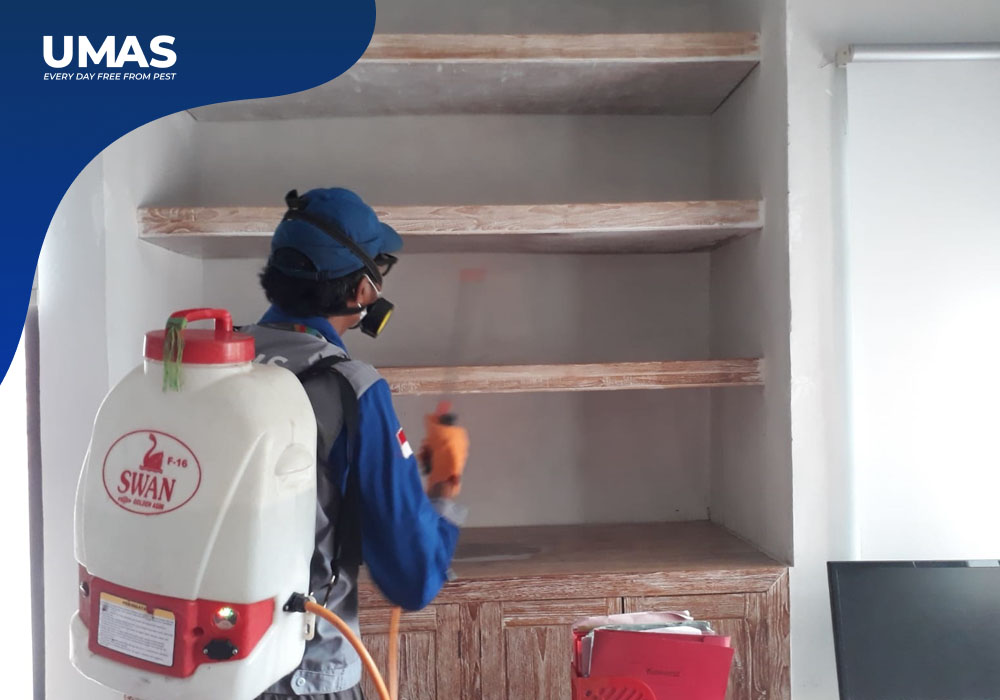
Above-Ground Baiting For Asian Subterraneans In Jakarta
Jakarta homeowners tend to think that termite trapping is a matter of placing plastic stations in gardens and checking them periodically by technicians who enter the station, then shrug their shoulders and move on. This isn't colony elimination or monitoring of perimeters. Baiting aboveground is a completely different field. The station isn't underground and is instead anchored on a mud-tube that is active or pressed into the excavated area. The bait isn't hidden as it is directly inserted into termites' commute route. For Asian subterranean species--Coptotermes gestroi, Coptotermes curvignathus, Microtermes insperatus--above-ground delivery bypasses every behavioral barrier that makes perimeter baiting slow and uncertain. Jakarta anti-termite service vehicles which don't have above ground stations are only equipped to check, not treat.
1. Above-Ground Stations require active infestation
The technicians install the stations and watch for termites. Above-ground baiting works on confirmation. The station cannot be deployed until mud tubes are found or timber that is damaged. This isn't a limitation, but a measure of efficiency. In sterile dirt, there is no plastic ever gets buried. Technicians don't sit for hours watching stations that never get damaged.
2. The Mud Tube transforms into Delivery Infrastructure
Stations above ground are designed to integrate into existing structures for termites. The station's base is an enclosed chamber over the mud tube's opening. Termites passing between nest and feeding area pass through the station. They then come into contact with the bait matrix and eat it and continue on their journey. The tube is not destroyed. The commuter pattern isn't disturbed. The colony uses its own infrastructure for poisoning itself.
3. For Above-Ground Deliveries Test for Palatability Is Different
The colony is already acquainted with the smell of wood that was taken away. Now it is possible to determine the location of feeding. Aboveground bait matrices are only required to meet the requirements. They do not have to look attractive. This allows for a looser formulation, allowing for slower-acting toxinants that might be rejected when competing with wood that is not treated. Jakarta exterminators must have several bait formulas. They need to choose the best one based upon observed feeding preferences.
4. Recruitment Multiplier through Self-Seeding
Feeding begins as soon as live termites are transferred from infested wood into the station's room above the ground. The termites that are introduced, already familiar with the local environment conditions and foraging rhythm start eating bait and recruiting nestmates through trophallaxis. This single action increases the rate of delivery of toxicants by about 30 percent. When exterminators kill termites that they scrape from damaged wood, they are destroying biological resources.
5. Coptotermes gestroi Responds Rapidly to Above-Ground Positioning
Coptotermes gestroi as well as other Asian Subterranean Termites keep a high rate of foraging throughout the entire year. Above-ground stations located on infestations that are active show typical feeding within 48-hours and quantifiable consumption of bait within one week. The timeframes for removing colonies are shortened from months to just a few weeks. The companies that offer timeframes of six months are either using inadequate matrixes or have not been able to recruit termites.
6. Both Microterms and macroterms require the use of a different location
Termites that develop fungus (Microtermes Insperatus, Macrotermes Glvus) don't build the same amount of mud tubes like Coptotermes. Their above-ground feeding is often hidden within the wood. They require the excavation of the damaged region, then insertion into the cavity of the feeder, and careful sealing. The station geometry is different. Jakarta exterminators who attempt Coptotermes protocols for Microtermes infestations will observe poor intake.
7. Moisture Conditioning Is Non-Negotiable
Above-ground lure matrices are made to specific amounts of activity in the water. Jakarta's relative humidity plays a role in the exchange of moisture. Bait stored in a toolbox on the road for weeks can dehydrate. Bait removed from sealed containers that are unattended may absorb atmospheric moisture and cause spoilage. Exterminators must prepare bait cartridges prior to installation by using water in the proper quantity.
8. Compressors with Inspection Frequency
The inspection schedule for baiting the perimeter is either quarterly or semiannual. Aboveground baiting occurs on a weekly basis. The bait is consumed quickly by active infestations; cartridges that are depleted need to be replaced in a matter of days instead of months. Elimination of colonies is only confirmed after feeding ceases and the mud tubes desiccate. If the service schedules above-ground inspections as part of their regular monitoring of their perimeter, they'll observe bait depletion and conclude that treatment is in progress, but miss the time for recovery of colony.
9. Certain warranties require different underwriting
Perimeter Baiting guarantees are priced based on station density and frequency of inspection. Above-ground baiting warranties are based according to species detection, the extent of infestation, and the structural complexity. One Coptotermes enterosus colony through a threshold of a door can be covered at standard rates. Microtermes infestations in multiple colonies that are spread across the entire first floor are distinct. Jakarta antitermite services who offer the same cost for both scenarios, mispricing the risk.
10. Above-Ground Treatment Is Not Only Therapeutic, but Also Diagnostic
This information can provide insight into the state of health of colonies. Consumption is rapid in a colony with a high demand for resources. Consumption that is followed by abandonment suggests the possibility of colony elimination or bait abstention. The mud tubes will darken if there is less traffic. The signals enable exterminators who are trained to recognize them and alter treatment parameters in real-time. Exterminators who merely swap cartridges and then leave are not utilizing the most information-rich treatment option for controlling termites.
Conclusion
Above-ground baiting to Asian subterraneans is not a service that can be added to; it is the intervention that distinguishes inspection companies from experts in colony removal. Perimeter baiting monitors. Above ground baiting is a treat. Perimeter baiting awaits to be discovered. Engineers are confronted by above-ground baiting. Perimeter-baiting is a source of quarterly service tickets. Aboveground encapsulation leads to complete colony elimination and the renewal of warranty that follows. Jakarta anti-termite service providers that resist the use of above-ground protocols typically cite costs for equipment, technician education requirements or having multiple bait matrixes. These are not obstacles and are actually investment opportunities. For the three initial deployments above ground, equipment costs are covered. The investment in training pays back as technicians become specialists in diagnostics and not just generalists. Multiple bait matrixes differentiate high-end exterminators from the ones that are common. The homeowners with active termite infestations do not want perimeter monitoring. They want the colony dead. Above-ground trapping is the most direct way to get there. Jakarta exterminators are always working on tubes, injecting soil and using above-ground stations. This allows the colony to continue to feed. Check out the best anti rayap for blog recommendations including rayap lemari, jasa pembasmi rayap, pembasmi rayap, cara membasmi rayap di lemari kayu, jasa pembasmi rayap, pembasmi hama, pembasmi rayap kayu, kayu tahan rayap, anti rayap kayu, anti rayap and more.
